ServicesWater Extraction
Water Extraction in Highland Springs
When water is sitting on your floors, the first job is getting it out. We pump and vacuum the standing water, check where it traveled with moisture meters and tell you plainly what we found before we recommend anything else.
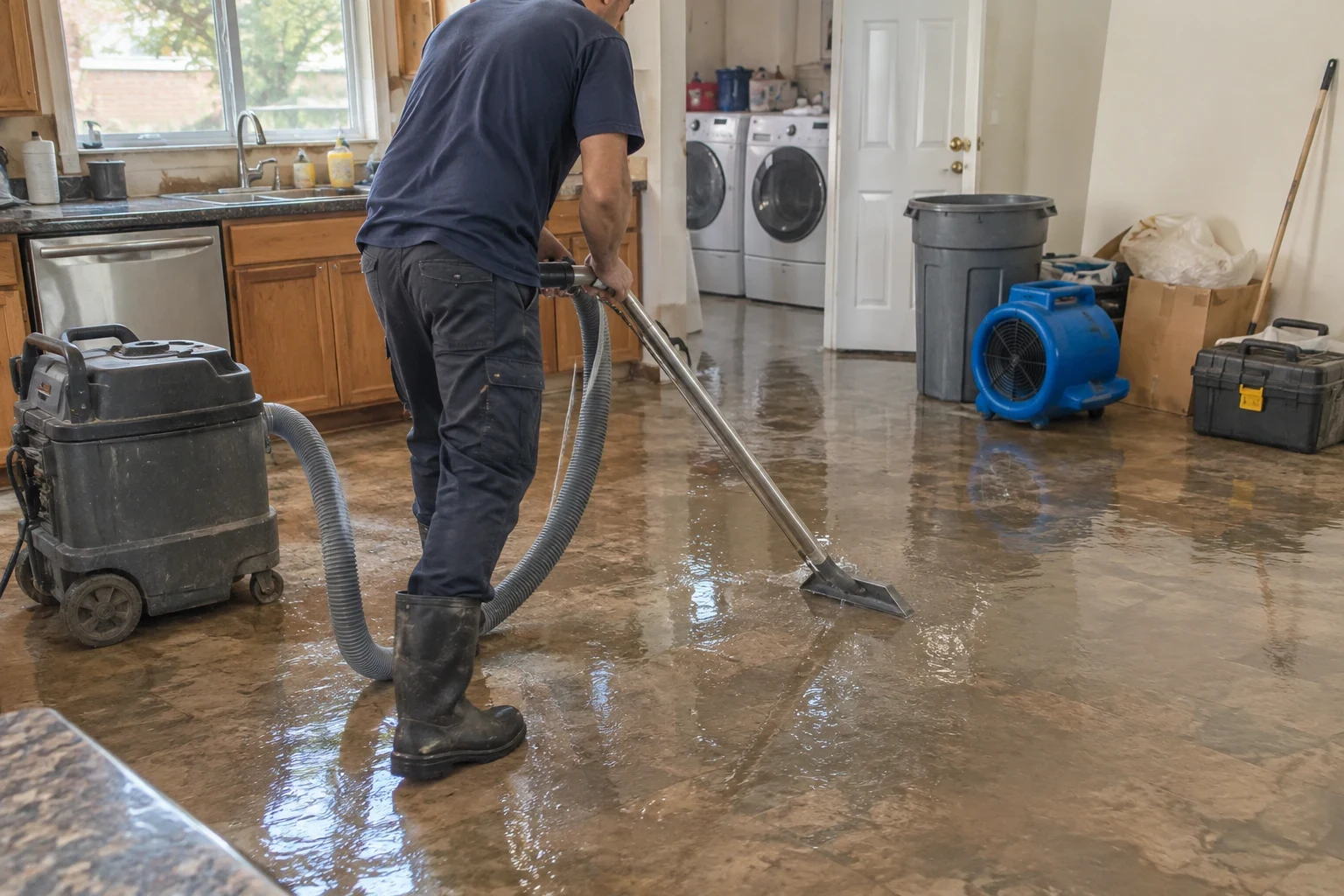
Getting the water out comes first
Water extraction is the step that removes liquid water from your home. A burst supply line, a failed water heater or a backed-up appliance can leave an inch of water on the floor in minutes. Fans alone will not fix that. Every gallon we pull out with a pump or extraction wand is a gallon your walls and subfloor do not have to soak up.
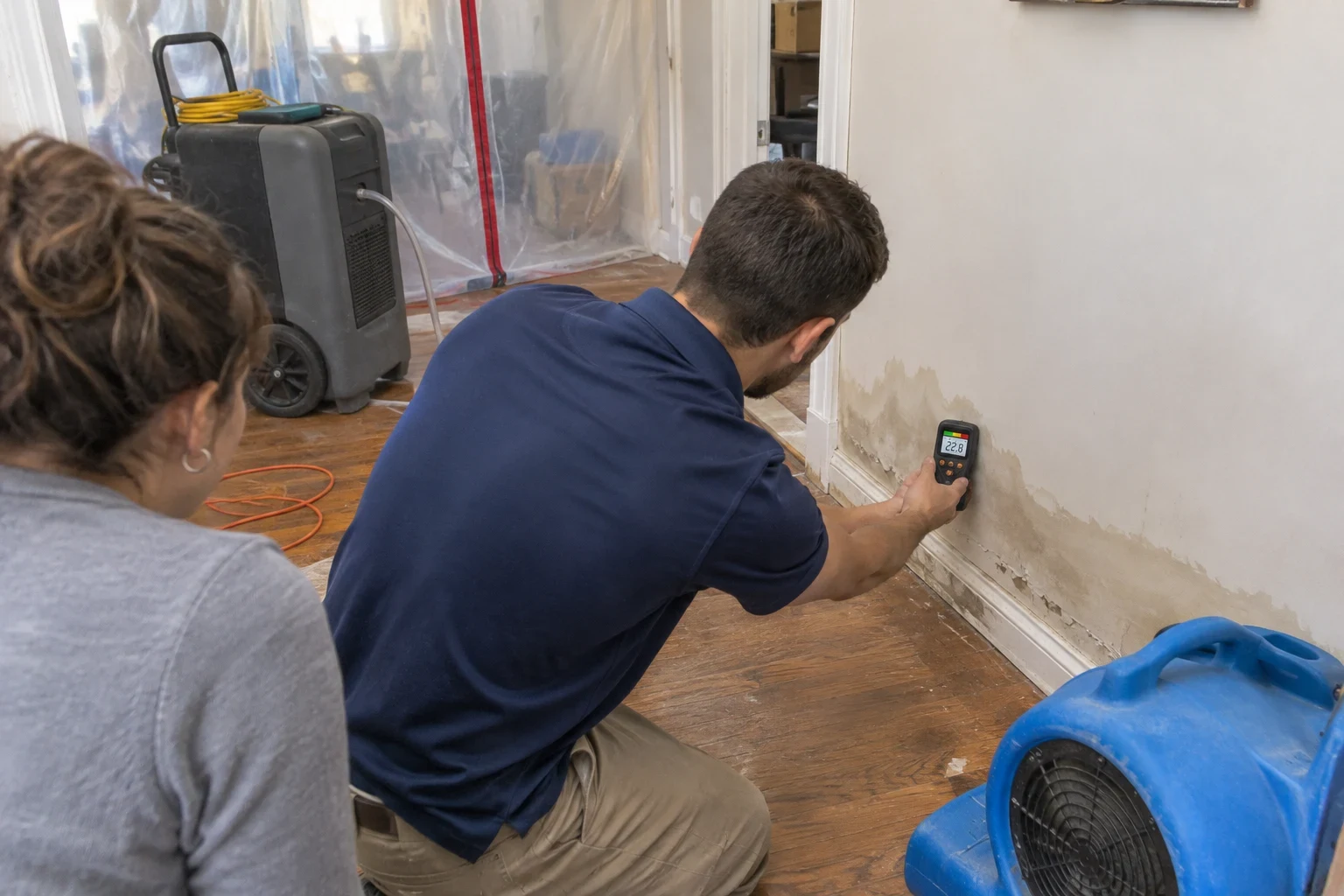
We start by looking. We find the source, walk every room the water reached and take meter readings at the edges of the wet area, because water almost always goes farther than it looks. Then we tell you what is wet, what is fine and what we plan to do. Our crew is IICRC certified, and we follow that standard for how water is removed and how wet materials are judged.
Extraction is usually followed by drying and dehumidifying. If the water came from outside or from a drain line, the job may fall under flood cleanup or sewage cleanup instead, and we will say so on the spot.
What our water extraction covers
- 01
Source check
Before we set up, we make sure the leak is stopped or the water is shut off. If a pipe or fitting failed, we show you the spot so your plumber can go straight to it.
- 02
Standing water removal
Submersible pumps take care of deep water. Truck-mounted and portable extractors clear what is left on hard floors and in low spots.
- 03
Carpet and pad extraction
Weighted tools squeeze water out of carpet and pad. We look at the pad underneath and tell you honestly if it can stay or has to go.
- 04
Moisture mapping
We check floors, baseboards and lower drywall with pin and non-invasive meters. You get a simple map of where the water traveled, along with photos.
- 05
Furniture and contents
Furniture goes up on blocks or out of the wet room so the legs do not stain the carpet or soak up water.
- 06
A paper trail for your claim
Every photo and meter reading we take goes into a record you can hand to your insurer. We work with most major insurance companies, and we explain each step in plain terms. What gets covered is still up to the adjuster.
Questions about Water Extraction?
Call(804) 265-4047Signs you need water extraction
Water you can see
Any standing water on a floor, in a crawl space or on a basement slab needs to come out with real equipment. Towels and a shop vac rarely get it all.
Carpet that squishes
If carpet feels wet when you step on it, the pad below is holding much more water than the surface shows.
Swelling at the baseboards
Baseboards that are puffing up or pulling off the wall mean water has wicked in behind them.
Warped or cupping floors
Hardwood that is starting to cup or laminate with lifting seams has water trapped underneath. The sooner it is pulled, the better the odds the floor can be saved.
A musty smell after a leak
A damp smell a day or two after a leak usually means water is still sitting somewhere hidden. Mold can start growing within a couple of days in warm, humid weather like a Virginia summer.
How a water extraction visit runs
- 1
You call, we head out
Give us a quick rundown of what broke and which rooms are wet. Our promise is on site in 60 mins or less, and while we drive we will tell you which valve or breaker to shut off.
- 2
Inspect and explain
We find the source, take moisture readings and show you what is wet. You hear the plan and why before any equipment gets turned on.
- 3
Pull the water
We set pumps and extractors, protect the dry rooms and move your things clear. On most jobs this takes up the biggest share of the first visit.
- 4
Re-check and set up drying
Once the water is out, we take a second round of readings. Anything still wet gets drying equipment, and we tell you when we will be back to check on it.
What affects the cost of water extraction
We set the price after we have looked at the damage, not from a guess over the phone. Before any work starts, we go over each line of the estimate with you so nothing on the bill is a surprise. If you are filing a claim, our notes and readings give the adjuster what they need.
- The size of the wet area
- Water that stayed in one room is a smaller job than water that slipped under a wall and into the hallway and bedrooms. Our moisture readings show the real footprint, not just the puddle you can see.
- What got soaked
- Tile and sealed concrete let go of water fast. Carpet, pad, hardwood and drywall hold on to it and need more passes and more time.
- The type of water
- A broken supply line brings clean water. Water from a drain or from outside carries dirt and germs, so it calls for extra cleaning and protective gear.
- How hard it is to reach
- An open kitchen floor is quick to work. Crawl spaces, finished basements and cramped closets take longer to get into and to clear.
Water extraction questions
Is a wet vac and a couple of box fans enough?
On a small puddle on a tile floor, it might be. Once water reaches carpet, drywall or the subfloor, a wet vac leaves most of it in place and fans just move damp air around. Our meters pick up moisture you cannot feel, so we can tell you whether the area is truly dry or only looks it.
Will my carpet have to be thrown out?
Not always. Carpet that got wet from a clean water source can often be extracted and dried where it lies. The pad underneath is a different story and is lost more often. We show you what we find and give you a plain answer.
Does homeowners insurance cover water extraction?
Many policies pay for sudden damage like a burst pipe but not for slow leaks or outside flooding. The adjuster is the one who decides what is covered. We work with most major insurance companies, and we are glad to explain how a claim like yours tends to move from the first call to the payout.
How long does extraction take?
Pulling the water out usually happens on the first visit and often takes a few hours. Drying the floors and walls afterward is the longer part, usually several days with equipment running and regular checks from us.
Do you serve areas outside Highland Springs?
Yes. We also work in nearby places like Sandston, Montrose, Mechanicsville and Richmond. The Service Areas page lists the rest.
Standing water in your home tonight
If it is safe, turn off the main valve and keep kids and pets out of the wet rooms. Then pick up the phone. We will come look, take readings and give you a straight account of the damage.