ServicesDrying and Dehumidifying
Drying and Dehumidifying in Highland Springs
The water you can't see does the real damage. We find it with moisture meters, then set air movers and dehumidifiers where they will actually work. We check readings every day and pull equipment only when your home tests dry.
What drying actually involves
Once the standing water is gone, the job is only half done. Drywall wicks water up from the floor. Subfloors, carpet pad, insulation and the bottom plates of your walls hold moisture for days. Left alone, that moisture warps hardwood, swells cabinet bases and gives mold a place to start.
Drying and dehumidifying is the controlled work of getting that moisture out. We start with an inspection: readings in each room, a map of how far the water spread, and plain findings before we recommend anything. If there's still water on the floor, we handle water extraction first.
We're IICRC certified, and we follow that drying standard on every job. That means we go by readings, not hunches, and we can show you the numbers each day.
What the work includes
- Moisture mapping
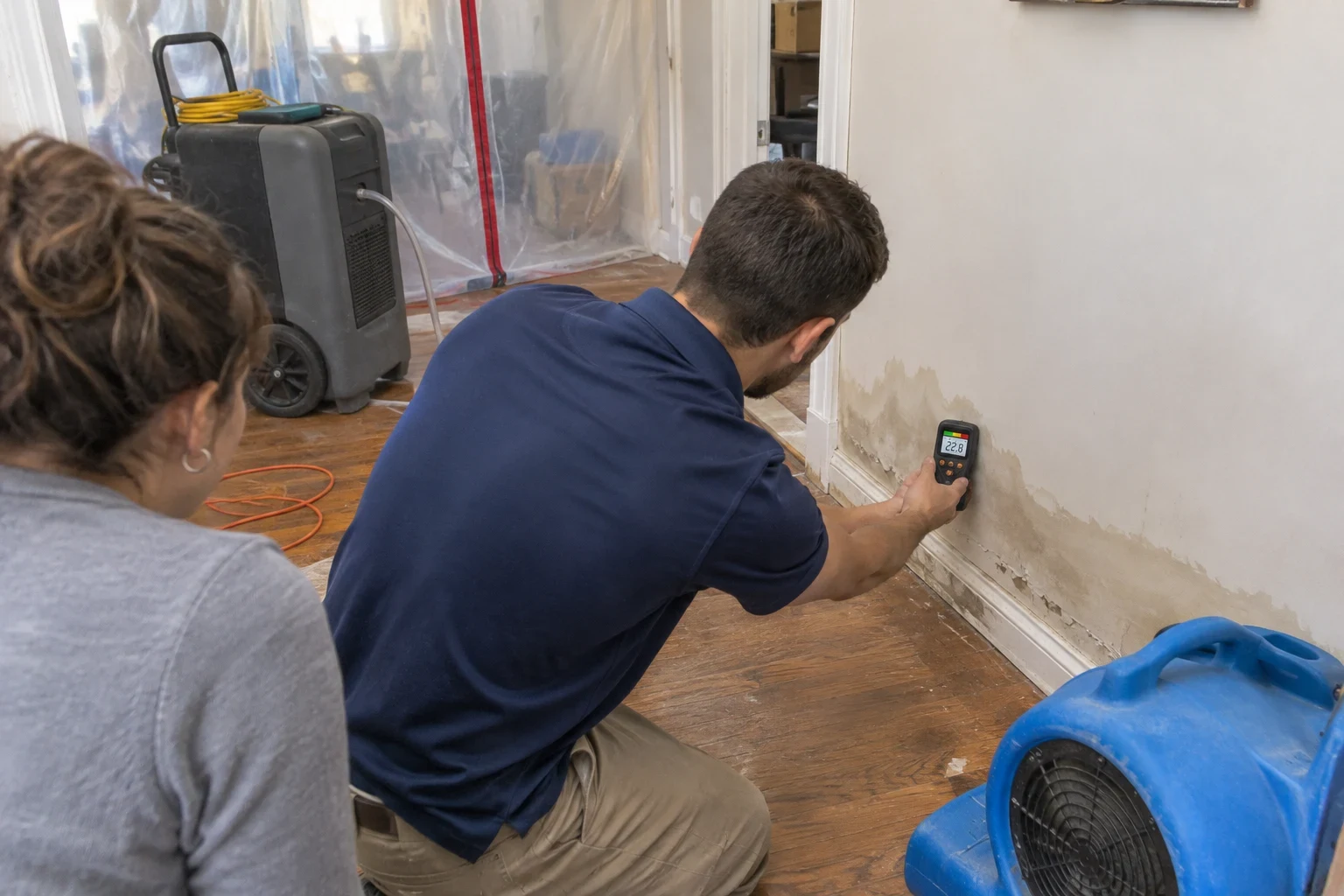
- We take readings in walls, floors and ceilings around the wet area and mark how far the water traveled. You get photos and a simple sketch of what we found.
- Air movers aimed at the wet spots
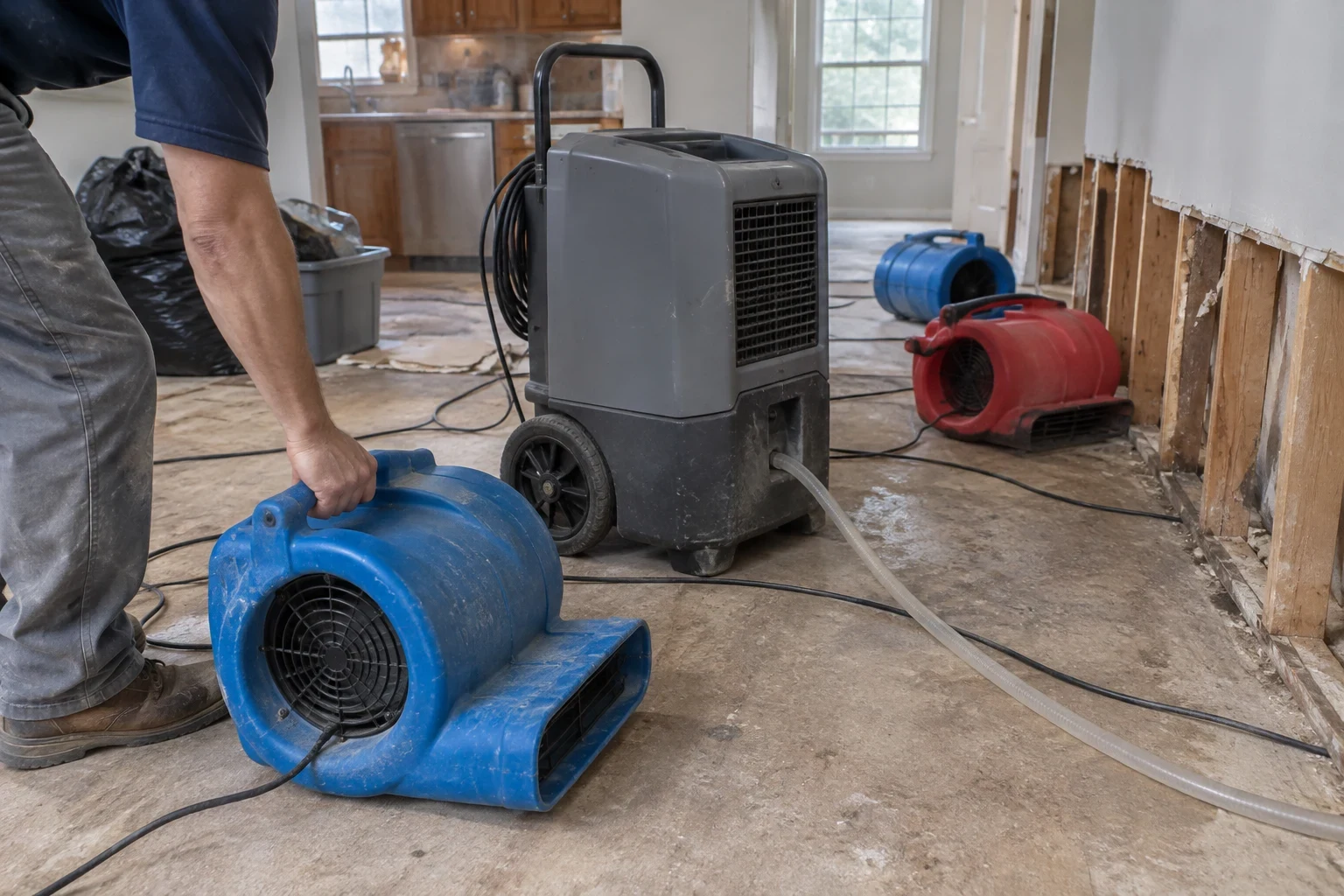
- Each fan is pointed so the airflow sweeps the damp wall or floor itself. A fan parked in the open part of a room does very little. As spots dry, we reposition them.
- Dehumidifiers sized to the space
- Dehumidifiers pull water out of the air so it doesn't settle back into drywall and wood. We size them to the room and to how much material is wet.
- Targeted wall and floor drying
- For water trapped behind drywall or under hardwood, we may drill small holes behind the baseboard or use floor drying mats. We tell you before we drill.
- Daily readings and a written log
- We come back each day to read the meters and adjust equipment. Those readings go into a log you can hand to your insurance company.
- A straight answer on what can't be saved
- Some materials dry fine. Swollen particleboard, soaked carpet pad and wet insulation usually don't. We show you which is which so you aren't paying to dry something that has to come out anyway.
Signs your home needs professional drying
Soft or stained drywall near the floor
If the bottom of a wall feels soft or shows a tide line, water has wicked up inside it. Box fans rarely reach that.
A musty smell that won't clear
That smell usually means moisture is still sitting under flooring or in a wall cavity. It often shows up before any mold you can see.
Cupping or buckling floors
Hardwood edges that rise or planks that lift mean water got underneath. Caught early, many floors flatten back out as they dry.
Damp crawl space air
Heavy, sticky air under the house keeps framing wet. Humid Virginia summers make it worse, because outside air can't dry anything on its own.
The leak is fixed but the spot still feels cool
Wet materials feel cooler than dry ones. If it's been a few days and the area still feels cold or damp, it isn't dry.
What moves the cost of drying
We can't price a drying job until we've seen it, because the wet you can see is rarely all of it. After the free inspection, we lay out the scope in writing before we start. We work with most major insurance companies, and we document the job the way adjusters expect.
How much is wet
Square footage and how far water moved into walls and subfloor set how much equipment the job needs.
What it soaked into
Concrete, hardwood, plaster and drywall dry at different rates. Dense materials take longer and need more targeted drying.
How long the water sat
Water that sat a day or two has gone deeper than a fresh leak. More depth means more days of equipment running.
Clean or contaminated water
A broken pipe or leaking water line usually leaves clean water, and the wet materials can often stay put while they dry. A backup or outside flooding means more removal and cleaning first, under sewage cleanup or flood cleanup.
From first call to dry walls
- 1
Phone us first
Give us a quick rundown of the leak and which rooms got wet. Our standard is on site in 60 mins or less, and the on-site inspection is free.
- 2
Inspect and explain
We meter every affected room and check behind baseboards and under flooring. Then we walk you through what we found and what we recommend, before any equipment comes off the truck.
- 3
Set up the equipment
We place air movers and dehumidifiers, remove what can't be dried and protect the floors and furniture around the work. The equipment is loud, so we'll tell you which doors to keep closed.
- 4
Check daily and adjust
We read the meters each day and move or remove equipment as areas dry. Most jobs take a few days, depending on materials and how long the water sat.
- 5
Confirm dry and hand off
When readings match the unaffected parts of your home, we pull the equipment and give you the drying log. If drywall or flooring came out, our repairs and rebuild work puts it back.
Drying and dehumidifying questions
Can't I just run a few fans myself?
For a small spill on tile, maybe. Once water gets into drywall, carpet pad or a subfloor, box fans dry the surface but leave the moisture inside. We'd rather look at it and tell you honestly if it's something you can handle.
How long will the equipment be in my home?
Most jobs run a few days. Hardwood, plaster and crawl spaces can take longer. We decide from the daily readings, not a set number of days.
Can we stay in the house while it dries?
Usually, yes, for clean water jobs. The equipment is loud and gives off some heat, so you'll want those rooms closed off. If the water came from a sewage backup or we find mold, we'll tell you which areas to stay out of.
Will you have to tear out my walls?
Not always. Many walls dry in place through small holes behind the baseboard. We remove drywall only when readings stay high, insulation is soaked or the water was contaminated, and we show you why first.
Will my insurance pay for drying?
Often it does when the water came on suddenly, such as a pipe that split or a washer hose that let go. We keep daily moisture logs and photos to back up your claim. Your adjuster decides what's covered; our job is to hand them accurate records.
Find out how wet it really is
We'll meter the area, show you the readings and tell you what it will take to dry. If it doesn't need us, we'll say so.