ServicesRepairs and Rebuild
Water Damage Repairs and Rebuild in Highland Springs
Once the water is out and the house is dry, the damaged parts still have to come back. We look over what was removed and what's left, tell you plainly what needs replacing, then rebuild the walls, floors and cabinets so your home is whole again.
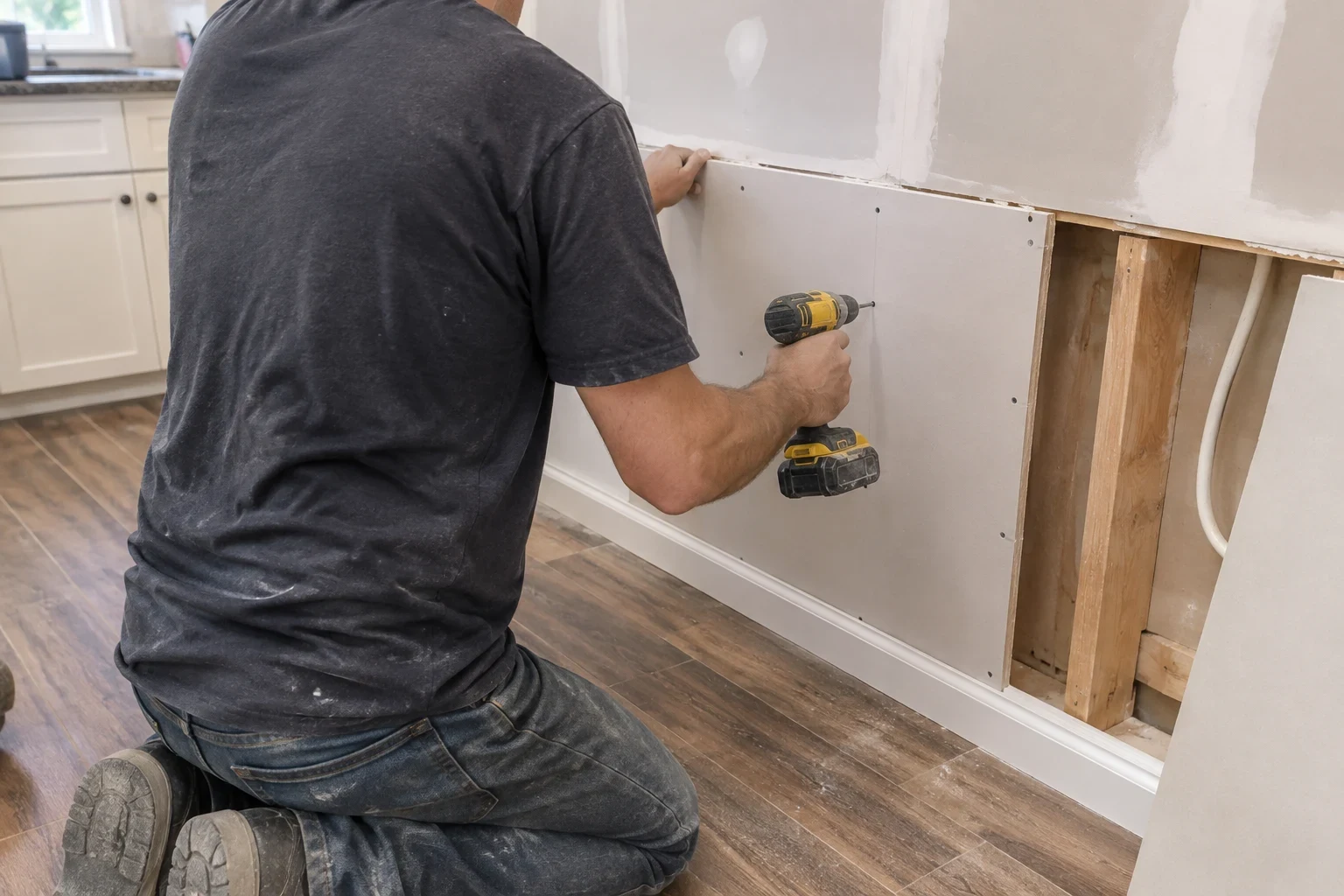
Putting the house back after the drying is done
Repairs and rebuild is the last stage of a water job. Wet drywall gets cut out, soaked carpet pad goes to the curb, and swollen cabinet bases come out. After drying, you are left with open walls and bare subfloor. This is where we put it all back.
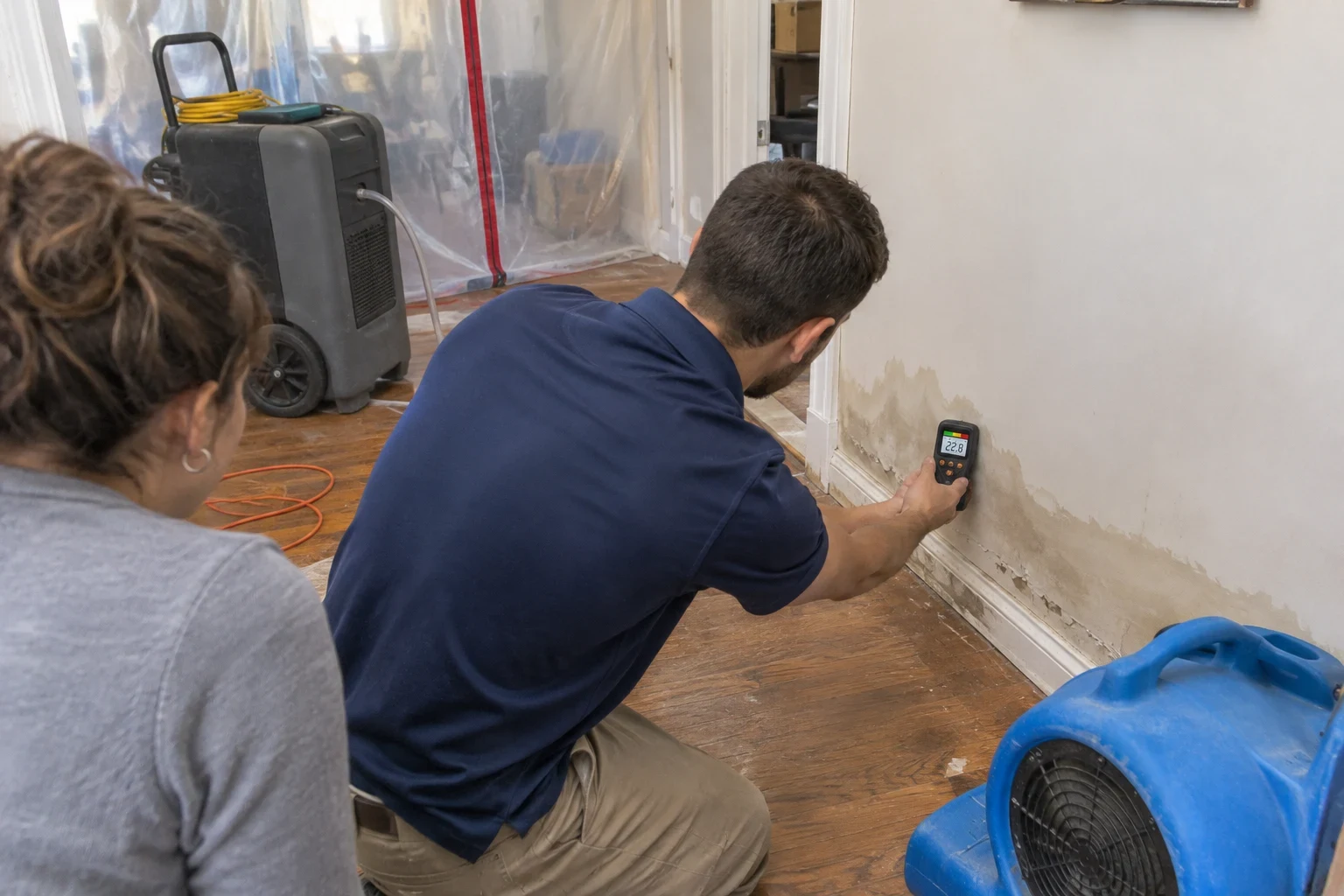
We don't start with a sales pitch. We start by checking moisture in the framing and subfloor, pressing on soft spots and looking behind what's still standing. Then we tell you what we found, show you photos, and give you a written scope. If something can stay, we say so.
Rebuilding over wood that is still damp traps moisture and invites mold. That's why our IICRC certified crew confirms the structure is dry before a single sheet of drywall goes up.
What the rebuild covers
- Drywall and insulation
- Fresh insulation goes into the open wall cavities first. Then new board is hung, taped, mudded and sanded until the repair blends into the old wall. Flood cuts usually run two to four feet up, and we match the texture above the cut.
- Subfloor and framing
- Plywood or OSB that stayed wet can delaminate and go soft. We cut out the bad sections, sister or replace damaged joists or studs when needed, and fasten new material so the floor doesn't bounce or squeak.
- Flooring
- We install carpet, vinyl plank, laminate, tile or hardwood to replace what was lost. When only one room was hit, we look for a clean break point like a doorway so new and old floors meet neatly.
- Cabinets, trim and doors
- Particleboard cabinet boxes swell and don't come back. We replace bases, baseboard, door casing and doors that warped, and reset countertops when cabinets underneath are swapped.
- Paint and finish work
- We prime new drywall and paint to match, usually wall to wall or corner to corner so you don't see a line where the old paint ends.
Signs your home needs repair work
Open walls after drying
If drywall was cut out to dry the cavity, the wall needs to be closed up. Leaving it open too long lets dust and pests into the space.
Cupped or buckled floors
Wood and laminate that soaked up water curl at the edges or lift in the middle. Most of the time it won't flatten back out on its own.
Swollen cabinet bottoms
Look at the toe kick and the floor of the sink base. If the edges are puffed up or crumbling, the box has taken on water and needs replacing.
Soft or spongy spots underfoot
A floor that gives when you step on it often means wet or rotted subfloor below. That needs to be opened and checked before new flooring goes down.
Doors that stick or won't latch
Wet framing and door jambs swell. A door that suddenly rubs can point to hidden damage in the wall around it.
What drives the cost of a rebuild
No two rebuilds cost the same, because the price depends on what the water actually reached. We give you a written scope after the inspection so you know what's being done before work starts. If insurance is involved, that same scope helps your claim.
How much was removed
A two-foot flood cut in one room is a small job. Several rooms with full-height drywall, insulation and flooring out is a much larger one.
What's underneath
Damaged subfloor or framing adds labor and material. We won't know for sure until we look, which is why we check before we quote.
Materials you choose
Matching existing hardwood, tile or cabinet styles can cost more than standard replacements. We'll tell you your options and let you pick.
Permits and code updates
Some structural or electrical work needs a Henrico County permit. Opening walls can also reveal items that have to be brought up to current code.
How a rebuild job runs
- 1
Inspection and moisture check
We walk every affected room with a moisture meter, check framing and subfloor, and take photos. You get a plain account of what's damaged and what isn't.
- 2
Written scope and insurance
Every repair gets its own line, so you can see exactly what's planned and why. Your adjuster can have copies of the same photos and scope, which keeps everyone working from one set of facts. We work with most major insurance companies.
- 3
Structural repairs first
Bad subfloor and framing get fixed before anything cosmetic. If the work needs a permit, we pull it and line up the county's sign-off.
- 4
Walls, floors and finishes
Drywall goes up, then paint, then flooring, cabinets and trim. We cover what's staying, keep the work area closed off, and clean up at the end of each day.
- 5
Final walkthrough
We walk the house with you and go over every item on the scope. Anything that isn't right gets fixed before we call it done.
Repairs and rebuild questions
Can you do the rebuild if another company did the drying?
Yes. We'll still do our own moisture check before we start, because we won't close up a wall we haven't confirmed is dry. If something is still wet, we'll show you the readings and talk about next steps.
Will my insurance pay for the rebuild?
Coverage comes down to your policy and what caused the damage, and your insurer makes that call, not us. What we can do is hand your adjuster clear photos and a line-item scope. We work with most major insurance companies. We'll also explain each step of the claim as it comes up.
Can you match my existing floor?
Often, yes, but not always. Older flooring may be discontinued or faded. When an exact match isn't possible, we'll suggest a clean transition point or replacing a larger connected area so it looks intentional.
Do I have to move out during repairs?
Most people stay home. We close off the work area and keep a path to the kitchen and bathrooms where we can. If the damage is in the only bathroom or the kitchen, we'll talk through the schedule with you up front.
What if you find mold when the walls are open?
We stop and show you. Mold has to be handled through our mold remediation service before rebuilding, or it comes right back behind the new drywall.
Find out what actually needs rebuilding
We come out, check the structure, and tell you straight what has to be replaced. For active leaks or standing water, we're on site in 60 mins or less.