ServicesMold Remediation
Mold Remediation in Highland Springs
Mold always has a water source. We find it first, show you what we found and tell you plainly what needs to come out. Then we contain the area, remove the growth and dry what is left so the problem does not come back.
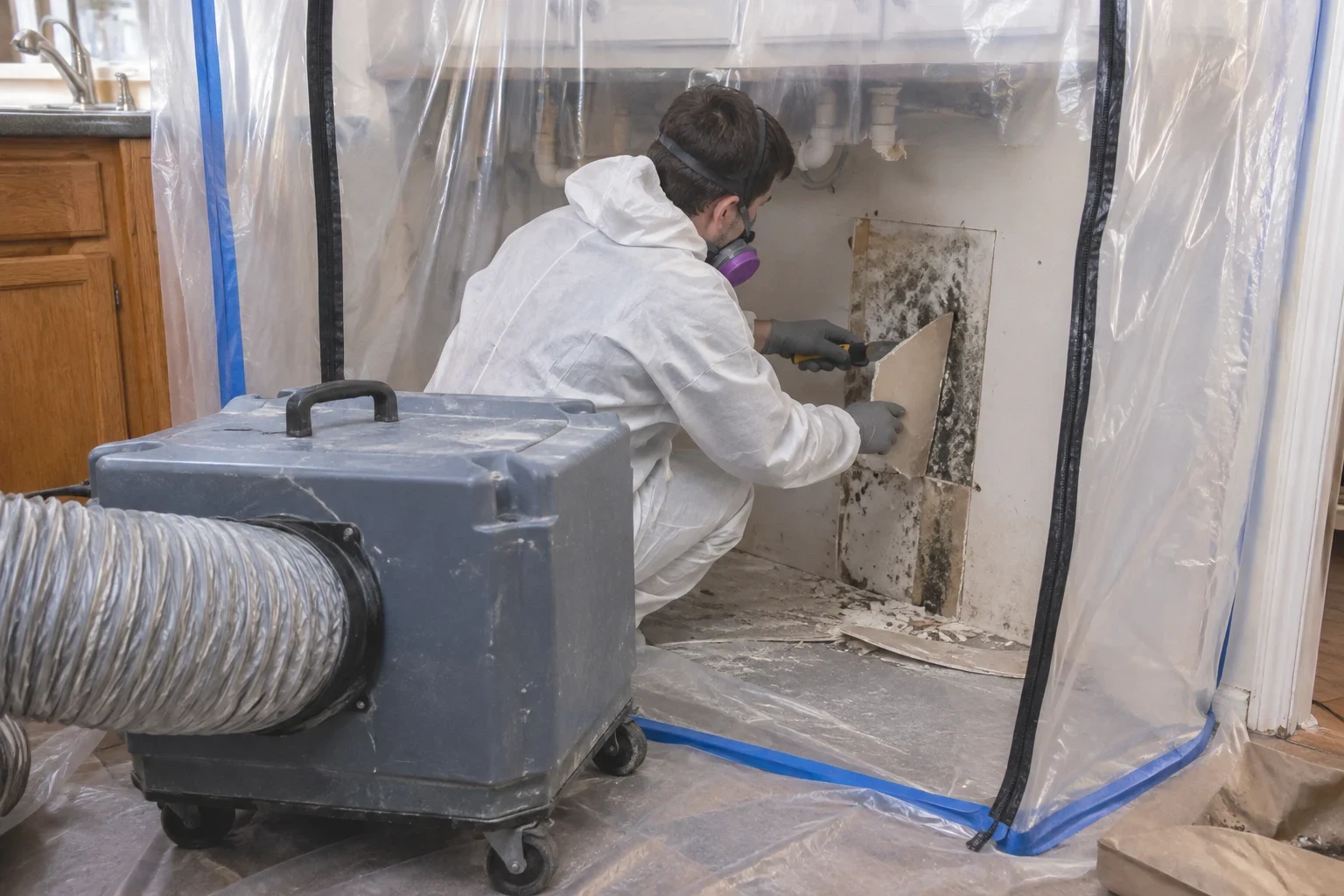
What mold remediation really means
Mold grows where something stays wet for more than a day or two. A slow leak under a sink. A damp crawlspace. Drywall that soaked up water and never fully dried. Wiping the spot you can see does not fix any of that. The roots run into the material, and the moisture keeps feeding it.
Our crew is IICRC certified, and we follow that standard on mold jobs. That means we seal off the work area, keep spores from spreading to the rest of your home, remove porous materials that are too far gone and clean the framing and surfaces that can be saved.
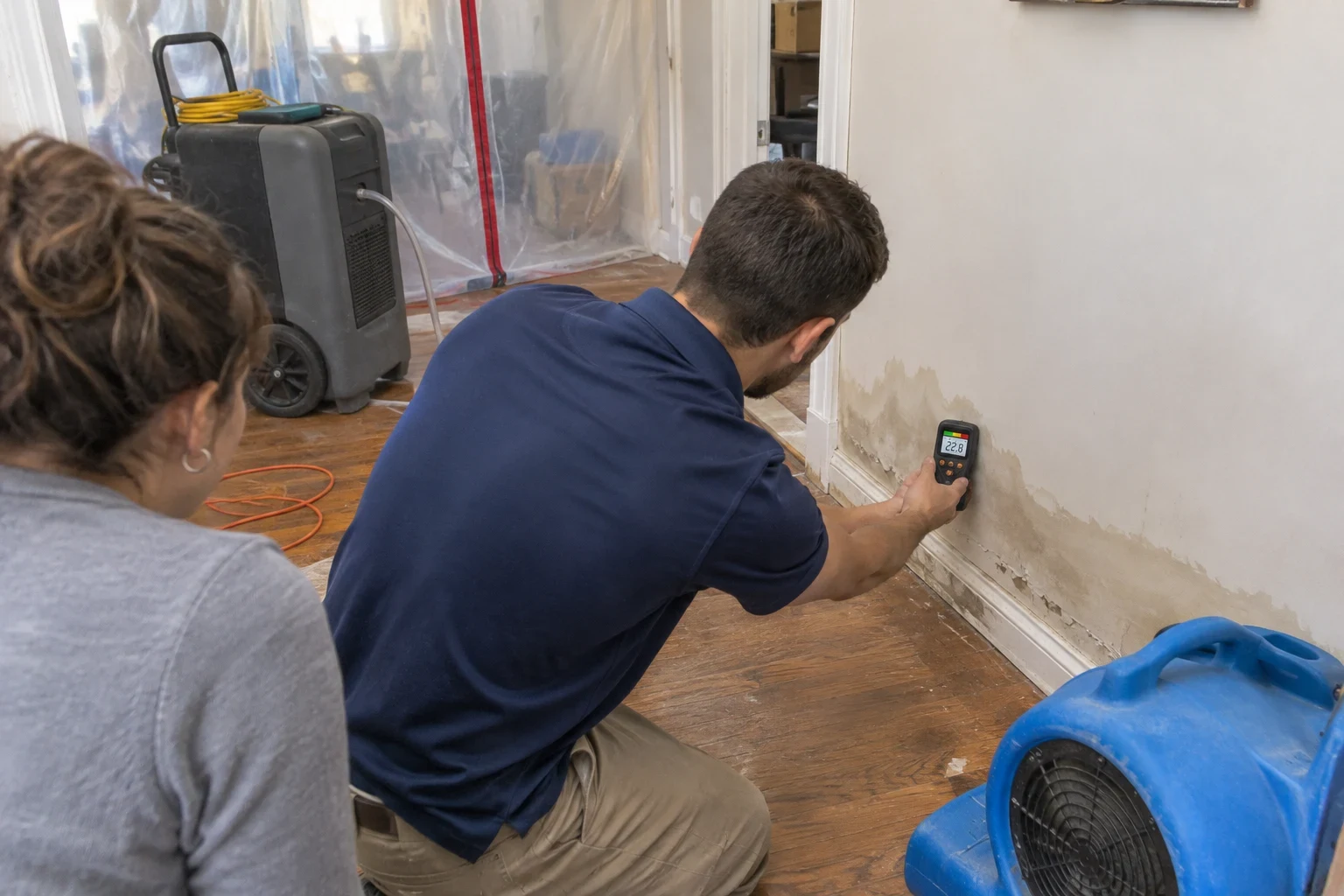
Every job starts with a close look. You get photos and moisture readings, plus a straight answer on how big the problem is. Sometimes it is a small patch we can handle in a day. Sometimes it is bigger. Either way, you hear it from us before any work starts.
What the work includes
- Finding the moisture source
- Our moisture meters and thermal camera show where water is getting in, even behind finished walls. When the cause is a plumbing leak or a gutter problem, we point it out so it gets fixed. Taking out mold while the water keeps coming is money thrown away.
- Containment
- We hang plastic sheeting and seal doorways around the work area. Air scrubbers with HEPA filters keep the space under negative pressure, so spores get pulled into the filter instead of drifting into other rooms.
- Removing damaged materials
- Drywall, insulation, carpet pad and ceiling tile hold mold deep inside. When they are affected, we cut them out, bag them inside the containment and carry them out sealed.
- Cleaning what stays
- Studs, joists and subfloor can usually be saved. We HEPA vacuum them, scrub the surfaces and treat them with an antimicrobial.
- Drying it out
- We bring in dehumidifiers and air movers and run them until our readings show normal moisture levels. Our drying and dehumidifying work is part of every mold job, not an extra.
When it is time to have us look for mold
A stale, earthy odor
A smell like a damp cellar in a closet, basement or bathroom often means growth hidden behind a surface. It usually gets worse on humid days.
Dark spots on walls or ceilings
Gray, green or black spotting, especially near windows, vents or bath fans, points to moisture sitting on that surface.
Stains that keep coming back
If you painted over a water stain and it showed up again, the wall behind it is likely still wet.
Damp crawlspace or basement
Long, humid Virginia summers push moisture into crawlspaces. Wet insulation, sweating ductwork or fuzzy growth on floor joists are worth a look.
Old water damage that was never dried
A leak that was mopped up but not dried with equipment can start growing mold in the wall or under the floor within days.
How a mold job runs
- 1
Walk-through and findings
We walk the area, take moisture readings and photos and check behind and below where the mold shows. Then we sit down with you and explain what we found and what we recommend. You decide from there.
- 2
Set up containment
We lay floor protection, build the plastic containment and start the air scrubbers. The rest of your home stays usable in most cases.
- 3
Remove and clean
Damaged materials come out and leave the house bagged. We clean and treat the framing and surfaces that stay.
- 4
Dry and check
Equipment runs until readings are back to normal. We check again before taking the containment down and show you the numbers.
- 5
Put it back together
Once the area is clean and dry, our repairs and rebuild crew can replace the drywall, insulation and trim so the room is finished.
What moves the cost of mold remediation
We can't give a fair number until we have seen the area and checked the moisture. After the inspection you get a written estimate that breaks the job into separate line items, so you can see what each piece costs. Sometimes opening a wall shows more damage than we expected. If that happens, we pause, show you the photos and agree on the next step together before any more work is done.
- Size of the affected area
- A patch behind a vanity is a different job than a whole basement wall. More square footage means more containment, more removal and more cleanup.
- What the mold is growing on
- Surface growth on framing can often be cleaned. Mold inside drywall, insulation or carpet means those materials come out and get replaced.
- Access
- Tight crawlspaces, attics and spaces behind built-ins take more time and setup than an open room.
- How long the moisture has been there
- An old, slow leak usually spreads farther than a recent one. Dealing with it sooner keeps the job smaller.
Mold remediation questions
Something not covered here? (804) 265-4047
Can I just clean it with bleach?
Bleach can lighten a stain on a hard surface, but it does not reach growth rooted inside drywall or wood. Most of it is water, so it actually adds moisture to the material. A small spot on tile or glass is fine to wipe up yourself. If it keeps coming back or covers more than a few square feet, it is time for a closer look.
Will my insurance cover mold?
That comes down to your policy and what caused the mold. Growth after a sudden event, like a burst pipe, is covered more often than growth from a leak that went on for months. We work with most major insurance companies, and we can hand your adjuster our photos and moisture readings. The coverage call belongs to your insurer.
Do I need to leave the house during the work?
Most families stay put. The plastic containment and HEPA air scrubbers keep the work area closed off from the rest of your home. If someone living there has breathing trouble or the job is large, we will talk through whether a day or two away makes sense.
How long does it take?
A small, contained job usually wraps up in a day or two. Bigger areas take longer, mainly because everything has to dry before we close it up. You get a time frame from us after the first visit.
Will the mold come back?
Mold can't grow without moisture. Once the water source is fixed and the area reads dry, there is nothing left to feed it. That is the reason we put so much time into the inspection and the drying.
How soon will someone show up after I call?
Our offer is on site in 60 mins or less. Speed counts most when mold is following a fresh leak or flood. The sooner the water is stopped and dried, the less material has to come out.
Find out what is behind that smell
We will come out, check the area and tell you plainly what we find. If it is a small job, we say so. If it is bigger, you will see the photos and readings yourself.