ServicesFlood Cleanup
Flood Cleanup in Highland Springs, VA
Storm runoff and rising groundwater carry soil and bacteria across your floors. Our first job is a careful inspection, so you hear plainly what can be saved and what can't. Then we pull out the water, mud and soaked materials and clean everything that stays.
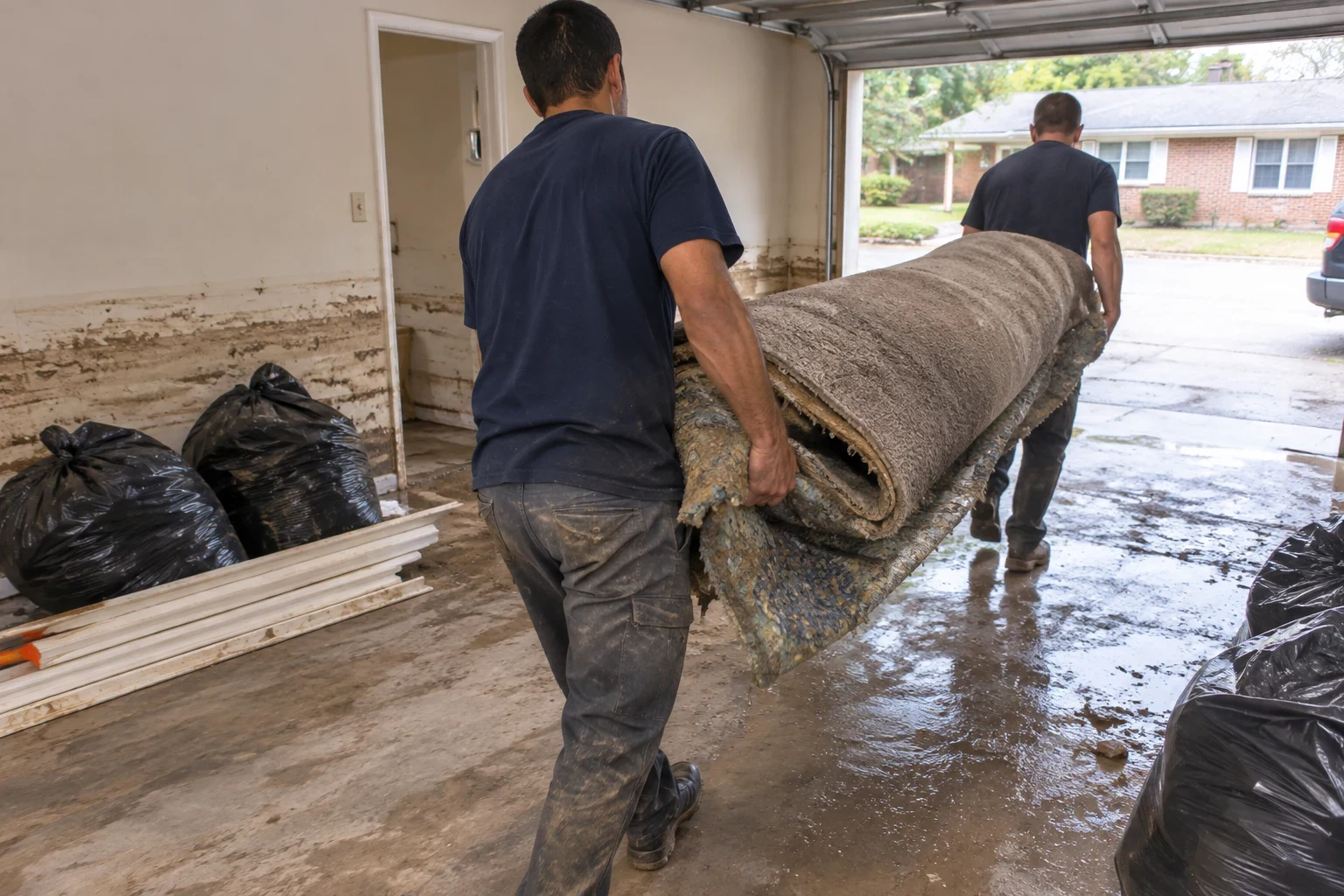
What flood cleanup means for your home
Flood cleanup is for water that came from outside: heavy rain, a storm surge in the yard, a creek over its banks, or groundwater pushing up through a slab or crawl space. That water is treated as contaminated. It has picked up soil, fertilizer, oil and whatever else was on the ground before it reached your floors.
That changes the work. A clean pipe leak can often be dried in place. Floodwater usually means carpet and pad go, drywall gets cut above the waterline, and every surface it touched gets cleaned and sanitized before drying starts.
We look before we recommend anything. You get plain findings, photos of what we see, and a straight answer on what has to come out.
What the work includes
- Inspection and moisture mapping
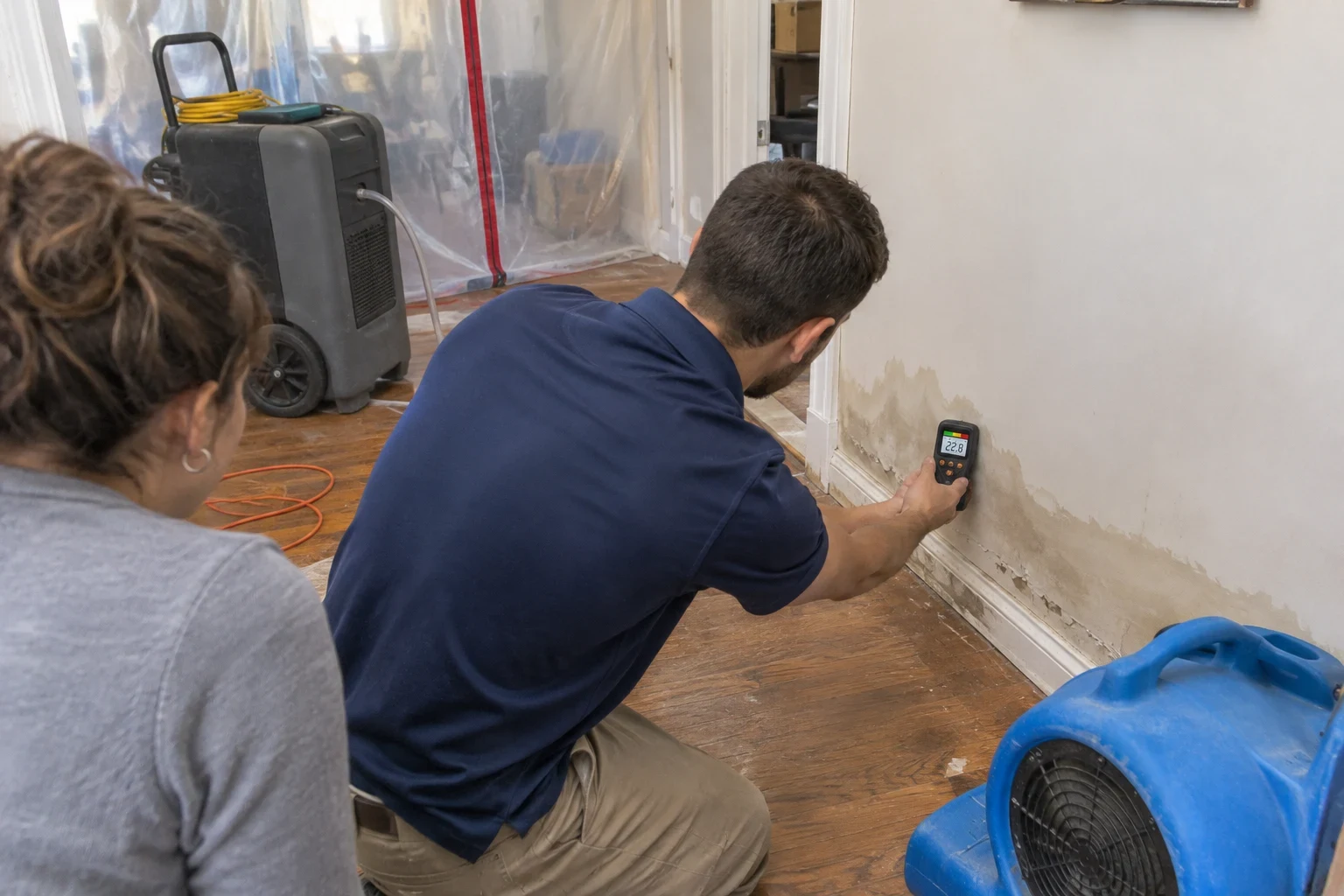
- We walk every affected room with moisture meters and a thermal camera. Water wicks up drywall and travels under flooring farther than it looks. We mark where it stopped so nothing wet gets sealed back up.
- Water and mud removal
- Truck-mounted and portable pumps pull standing water out fast. Then we shovel and squeegee out silt, which holds bacteria and keeps surfaces wet. Our water extraction crew handles the deep cases.
- Flood cuts and tear-out
- Drywall that sat in floodwater gets cut a foot or two above the waterline. Wet insulation comes out with it. Carpet and pad that touched floodwater are bagged and hauled away.
- Cleaning and sanitizing
- Studs, subfloor, concrete and anything staying in the house get cleaned and treated with an antimicrobial. This step is what keeps the smell and mold from showing up a month later.
- Structural drying
- Once the space is clean, we set air movers and dehumidifiers and check readings daily. That side of the job is covered in more detail on our drying and dehumidifying page.
- Photos and records for your claim
- We photograph damage before and during work and keep moisture logs. We work with most major insurance companies, and we can explain what an adjuster will want to see. The coverage decision stays between you and your insurer.
Signs floodwater needs more than towels and fans
The water started outdoors
Water that crept under a door, seeped through a foundation wall or rose out of a floor drain in a storm is dirty water. That holds even if it's only an inch deep.
A brown stain line on the walls
Silt leaves a mark at the high point on drywall and baseboards. Anything below it has wicked up contaminated water.
Standing water under the house
Plenty of homes in this area are built over crawl spaces. Water pooled down there soaks the joists and insulation and pushes humidity into the rooms above.
An earthy, musty odor
If the house smells like damp soil a day or two after the storm, something is still wet and beginning to grow. Airing it out won't fix that.
Soft, cupped or swollen floors
Cupping hardwood or puffed-up laminate tells you water got beneath it. The subfloor has to be checked.
How a flood cleanup day runs
- 1
Your call gets a crew moving
We offer emergency water damage response, and our offer is on site in 60 mins or less. We'll ask where the water came in and how deep it is. We'll also tell you how to stay safe until we get there, like staying out of standing water near outlets and cords.
- 2
Look first, then talk
Nothing gets torn out until we've checked that the power is safe, mapped the moisture and photographed the damage. Then we sit down with you and go room by room: what we saw, what needs to come out, and why.
- 3
Pump, shovel and tear out
Pumps run first, then the silt comes up and the wet drywall, insulation and carpet come out. Debris gets bagged as we go, and we leave a clear path so you can still move through your home.
- 4
Clean, sanitize and dry
Every exposed surface is cleaned and treated. Air movers and dehumidifiers go in, and we return to take readings until the numbers show the structure is dry.
- 5
Decide what comes next
With the structure dry, our repairs and rebuild service can put walls and floors back. If you'd rather use your own contractor, we hand over the moisture logs and photos.
What moves the cost of flood cleanup
No one can honestly price a flood job sight unseen, so we don't quote numbers over the phone. Once we've inspected, we put the estimate in writing with every piece of the work broken out line by line. If opening a wall turns up more damage, we stop, show it to you, and agree on it before doing more.
- Square footage that got wet
- A single room is a much smaller job than a whole floor plus the crawl space. The wet area sets the labor, the equipment count and the disposal load.
- Depth of the water
- The higher it climbed, the taller the flood cuts, the more insulation that comes out, and the more surface there is to sanitize.
- Time the water stood
- Two or three days of standing water soaks in deeper and lets mold get started. If growth is already there, mold remediation may become part of the plan.
- Floor and wall materials
- Tile over concrete cleans up well. Carpet, laminate and old plaster over lath each react differently and can change what has to be removed.
- Access and mud load
- Cramped crawl spaces, finished basements and thick silt all take longer to clear and haul away.
Flood cleanup questions
Something not covered here? (804) 265-4047
Can I just dry it out with fans?
Not with floodwater. Fans dry the surface but leave the bacteria and silt behind, and they can push contaminated dust around. Wet porous materials need to come out and the rest needs cleaning first. Then drying works.
Do my carpets have to be thrown out?
Carpet pad that touched floodwater can't be saved. Carpet itself usually goes too, because the contamination soaks through the backing. We'll tell you plainly if anything is an exception and why.
Who does the work?
Our crew is IICRC certified, and we follow that standard for contaminated water. It covers how water is classified, what gets removed and how drying is checked.
Will my insurance cover a flood?
It depends on your policy. Standard homeowners policies often treat outside floodwater differently than a burst pipe, and flood coverage is usually separate. We document everything and work with most major insurance companies, but your adjuster makes the call on coverage.
Can we stay in the house during cleanup?
Often yes, if the damage is limited to part of the home and the power is safe. If sewage mixed with the floodwater, we'll talk about keeping kids and pets out of those areas. Our sewage cleanup page explains that work.
How long does it take?
Removal and cleaning usually take a day or two. Drying typically runs several more days, depending on materials and how long the water sat. We check readings and tell you where things stand at each visit.
Floodwater in your home? Let's look at it first.
We serve Highland Springs and nearby towns like Sandston, Mechanicsville and Richmond. Tell us what happened and we'll come inspect, show you what we find, and get the water out.