Highland Springs, VA
Water Damage Restoration in Highland Springs, Starting With a Careful Look
When water gets into your home, we come out, check where it went and tell you plainly what we see. Then we handle water extraction, drying, mold remediation, sewage cleanup and the repairs that follow. We work in Highland Springs and nearby towns like Sandston and Mechanicsville.
- IICRC certified
- Free on-site inspection
- Photos of what we find
- Findings before any work
What Moves the Price
Every water job is different, so we price it after we see it. The cost comes down to how much got wet, what got wet and how long it stayed that way. Here is what matters most.
Once we have seen the damage, you get a written estimate broken into line items, so each part has its own cost before work begins. Opening a wall sometimes turns up more, and when it does, we stop, point it out and agree on the change with you.
- How far the water spread
- One wet bathroom floor is a small job. Water that ran under walls into two or three rooms means more extraction, more equipment and more days of drying.
- Clean water or dirty water
- A burst supply line is clean water. A sewer backup or outside floodwater carries bacteria, so porous materials it touched usually have to come out and the cleanup takes more steps.
- Materials involved
- Tile and vinyl dry or clean up well. Carpet pad, laminate and the bottom of drywall often do not. Hardwood can sometimes be saved with careful drying, but not always.
- How long it sat
- Water that is caught early dries faster and costs less. After a couple of days, mold can start, and that adds mold remediation to the job.
- Access and what is underneath
- Crawl spaces, finished basements and wet insulation take more time to reach and dry. Rotted subfloor found under the damage changes the repair plan.
- Rebuild and permits
- Putting back drywall and flooring is its own line of work. Larger structural or electrical repairs may need a county permit and sign-off.
What We Do Inside Your Home
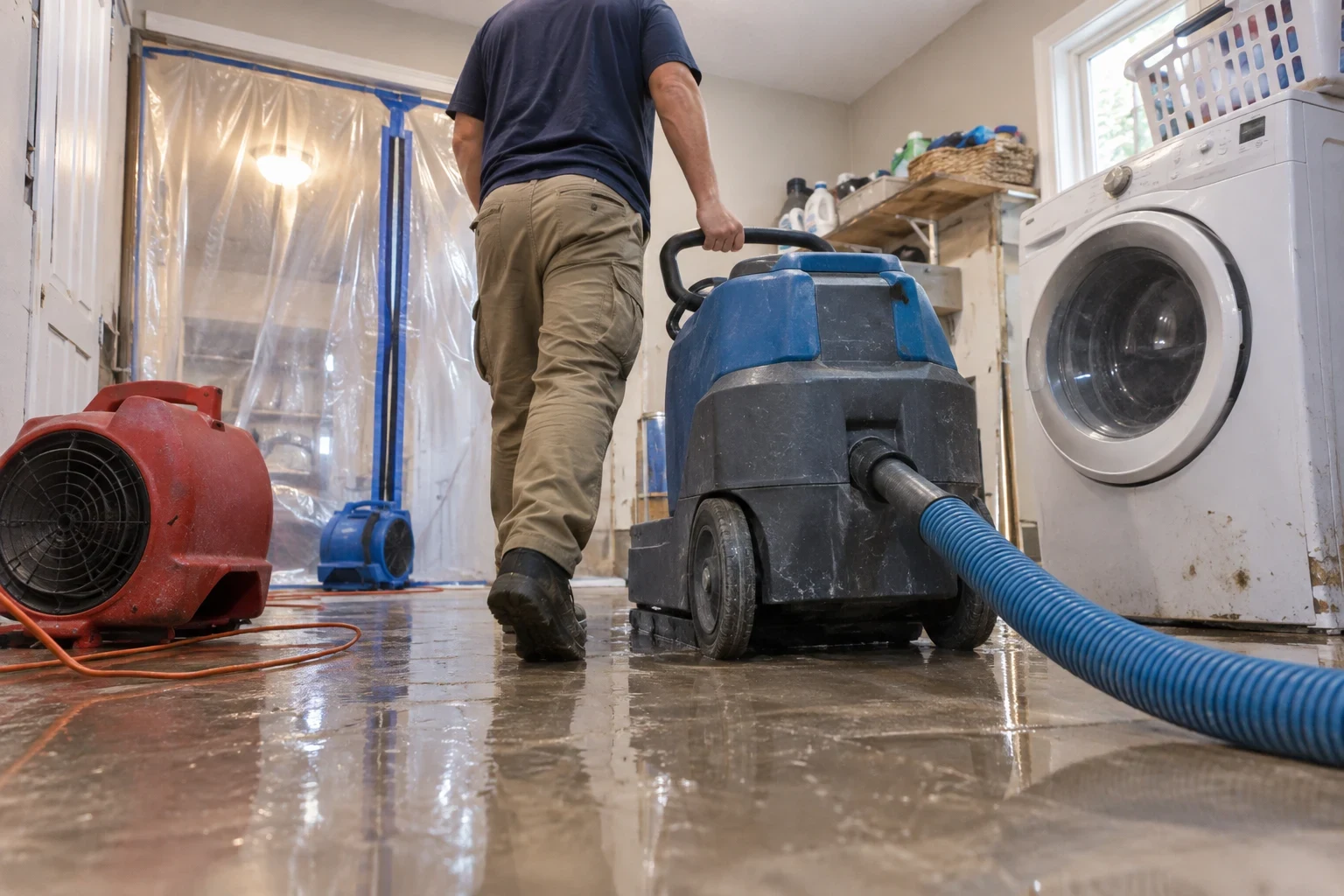
Most jobs start with water extraction and then drying and dehumidifying, because standing water and wet framing do the most harm in the first day or two. If the water sat too long, we move on to mold remediation. Backed-up drains and toilets call for sewage cleanup, which follows stricter steps. Once everything is dry and clean, our repairs and rebuild work puts the drywall, flooring and trim back.
Water Extraction
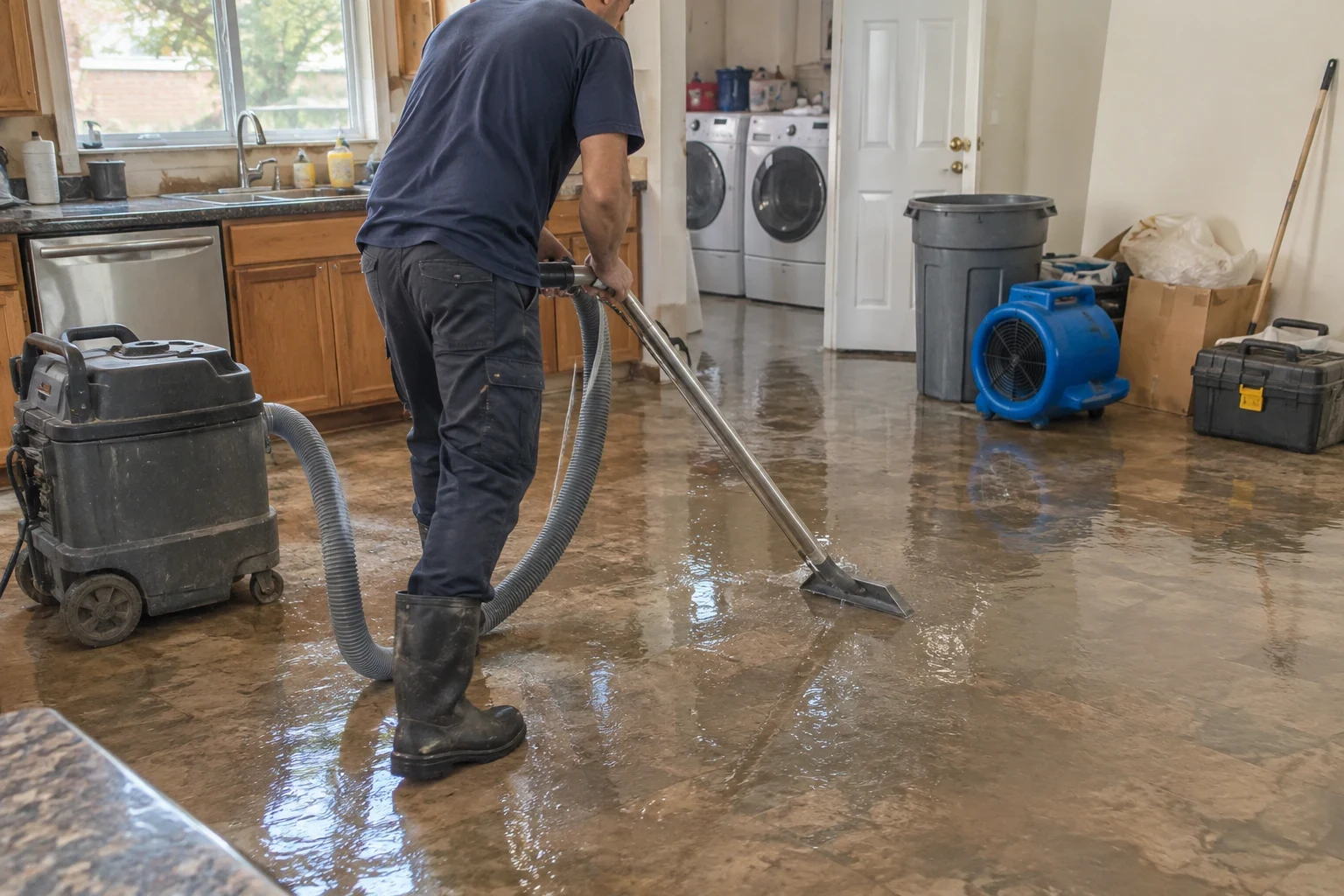
Truck-mounted and portable extraction that gets standing water out of floors, carpet and pad, followed by moisture readings so you know what is still wet.
Drying and Dehumidifying
We find hidden moisture with meters, set air movers and dehumidifiers to match, and check readings daily until walls and floors test dry.
Mold Remediation
We find what is feeding the mold, contain the area, remove what can't be saved and dry it out so it stays gone.
Flood Cleanup
Storm or groundwater in the house? We pull out the water and mud, remove what can't be saved, sanitize, and dry the structure.
Repairs and Rebuild
We rebuild drywall, floors, cabinets and trim after water damage, starting with a careful check of what is still wet or weak.
Sewage Cleanup
Sewage backups contained, cleaned out, disinfected and dried, with a clear list of what has to go and what can stay.
Where We Work
We serve Highland Springs and the towns around it, including Sandston, Mechanicsville, East Highland Park, Montrose and Richmond. We also cover Lakeside, Bensley, Chamberlayne, Meadowbrook and Laurel. The same careful check and the same written estimate apply wherever you live.
- Highland Springs
- Mechanicsville
- East Highland Park
- Montrose
- Sandston
- Richmond
- Lakeside
- Bensley
- Chamberlayne
- Meadowbrook
- Laurel
Not sure if we cover your street? Ask when you call and we will tell you right away. The Service Areas page lists the towns we visit most.
About Our Company
We are a local water damage restoration company based in Highland Springs. Our work is inside people's homes, often on their worst day, so we keep things simple. We show up, look carefully and tell you what we see in everyday words.
Water hides well. It runs under flooring, wicks up drywall and settles in crawl spaces where nobody looks. That is why we check before we cut. You get honest findings first and a plan second, and the plan only covers what the damage really needs.
- Certifications
- IICRC certified
From Your Call to Finished Repairs
This is the usual order of a job, start to finish. Small leaks may skip a step or two.
- 1
You call, we come out
Tell us what happened and where. We are on site in 60 mins or less. If you can do it safely, shut off the water at the main.
- 2
Check and explain
We go over the whole affected area with meters and a thermal camera, take photos and walk you through what we found. Nothing gets torn out before you hear why.
- 3
Extract and dry
We pull out standing water, remove what cannot be saved and set fans and dehumidifiers. We take readings each visit until the framing and subfloor are back to normal.
- 4
Clean and treat
If the water was dirty or mold has started, we clean and treat the affected areas behind containment so it does not spread to the rest of your home.
- 5
Repair and rebuild
Once everything reads dry, we replace drywall, insulation, flooring and trim, and pull the permit when the work needs one.
Common Questions
- How soon will someone arrive after I call?
- Once you hang up, a crew heads your way, and our promise is on site in 60 mins or less. That hour counts, because drywall and wood keep soaking up water and mold can start within a couple of days. Until we pull up, turn off the main water valve if it is safe to reach and keep everyone clear of wet outlets and cords.
- Will my insurance cover this?
- That depends on your policy and on what let the water in. Many policies pay for sudden damage, like a supply line that splits without warning, and many leave out slow leaks or water rising from outside. We work with most major insurance companies and give you photos and moisture readings to support the claim. The adjuster decides what is covered.
- Is the inspection really free?
- Yes, it costs you nothing. We check the damage with meters and a thermal camera, then walk you through what we found. You get a written estimate and make your choice from there.
- Do you have to tear out my walls?
- Not always. Damp drywall from clean water can often be dried right where it is. If it is soaked, swollen or touched by dirty water, we cut out the lower section, usually a little above the wet line, and replace it once the framing is dry.
- How long does drying take?
- Most homes need three to five days of drying, and hardwood, crawl spaces or heavy soaking can take longer. Muggy summer air slows it down too. We take readings on each visit and only pull the equipment when the materials test dry.
- Can we stay in the house during the work?
- In most cases, yes. The fans and dehumidifiers are loud but safe to live around. On sewage jobs or bigger mold jobs, we may ask you to keep out of the affected rooms until the cleanup is finished.
- What if you find mold?
- We point out where it is and how far it has spread. Small spots are often dealt with during drying. Heavier growth gets full mold remediation behind containment, and we explain that plan before anything starts.
How We Work
We look before we recommend anything. You hear what we found, see the photos and decide with us.
A careful look first
We use moisture meters and a thermal camera to trace water behind walls and under floors. Wet drywall often looks fine on the surface. The meter tells us how far it actually spread.
Plain findings, with photos
We show you the wet areas, the readings and the photos on the spot. If a carpet pad has to go, you will see why. If something can be dried in place, we say so.
Only what the damage calls for
We cut out what is ruined and dry what can be saved. A two-foot flood cut beats tearing out a whole wall when the readings stop at eighteen inches.
Records your claim can use
From day one we keep dated photos and daily moisture logs, the kind of proof an adjuster asks for. We work with most major insurance companies and can tell you what usually happens next with a claim. What your policy pays is still up to the adjuster.
We keep the mess contained
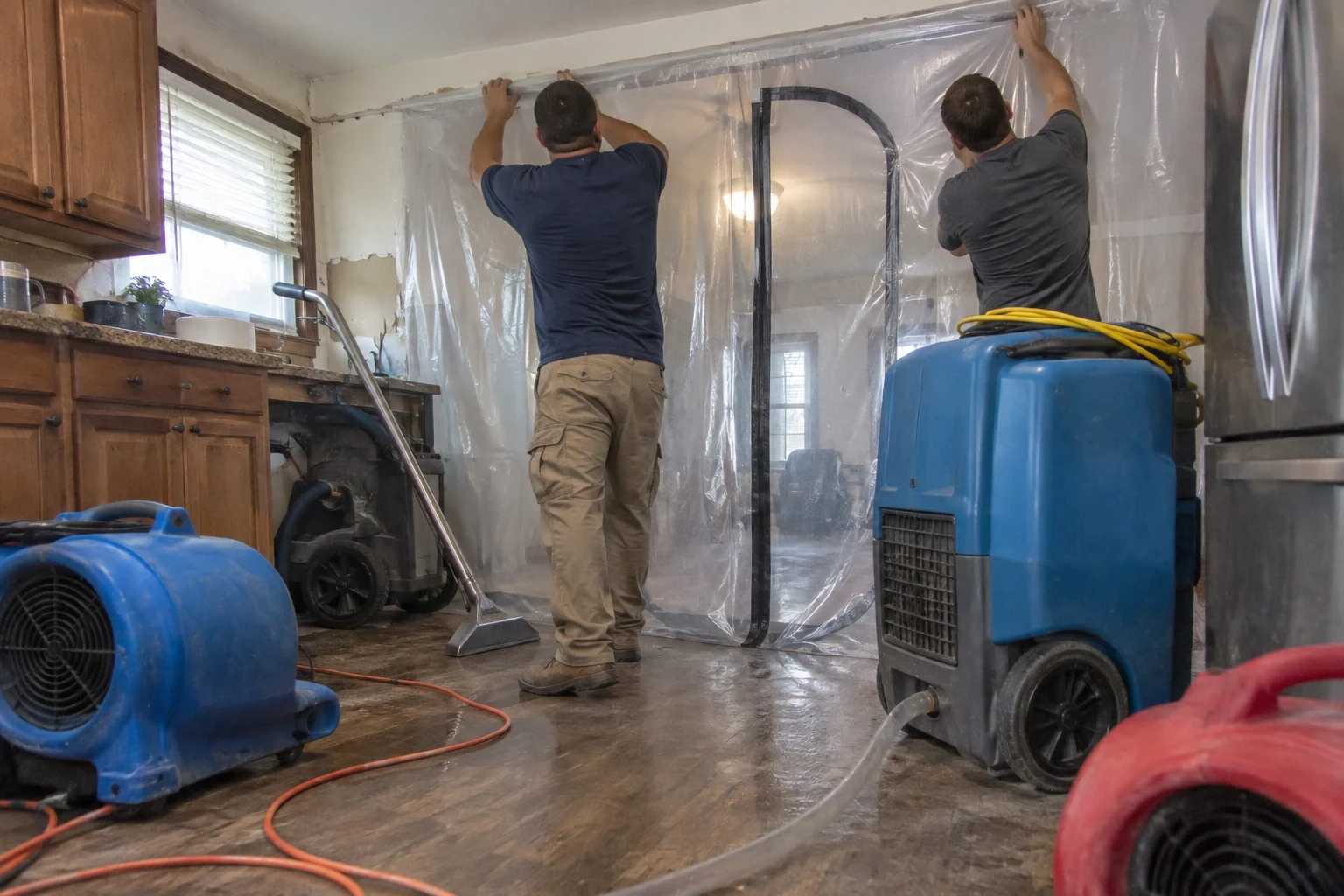
We lay down floor protection, set up plastic barriers where dust or mold is involved and clean up at the end of each visit.
Water Where It Should Not Be?
The sooner we look, the less there is to tear out. We will come out, find where the water went and tell you plainly what it needs.