ServicesSewage Cleanup
Sewage Cleanup in Highland Springs
A sewage backup is not a mop-and-bucket job. We come out, look at where the water went and what it touched, and tell you plainly what has to be removed. Then we contain it, clean it out, disinfect and dry your home.
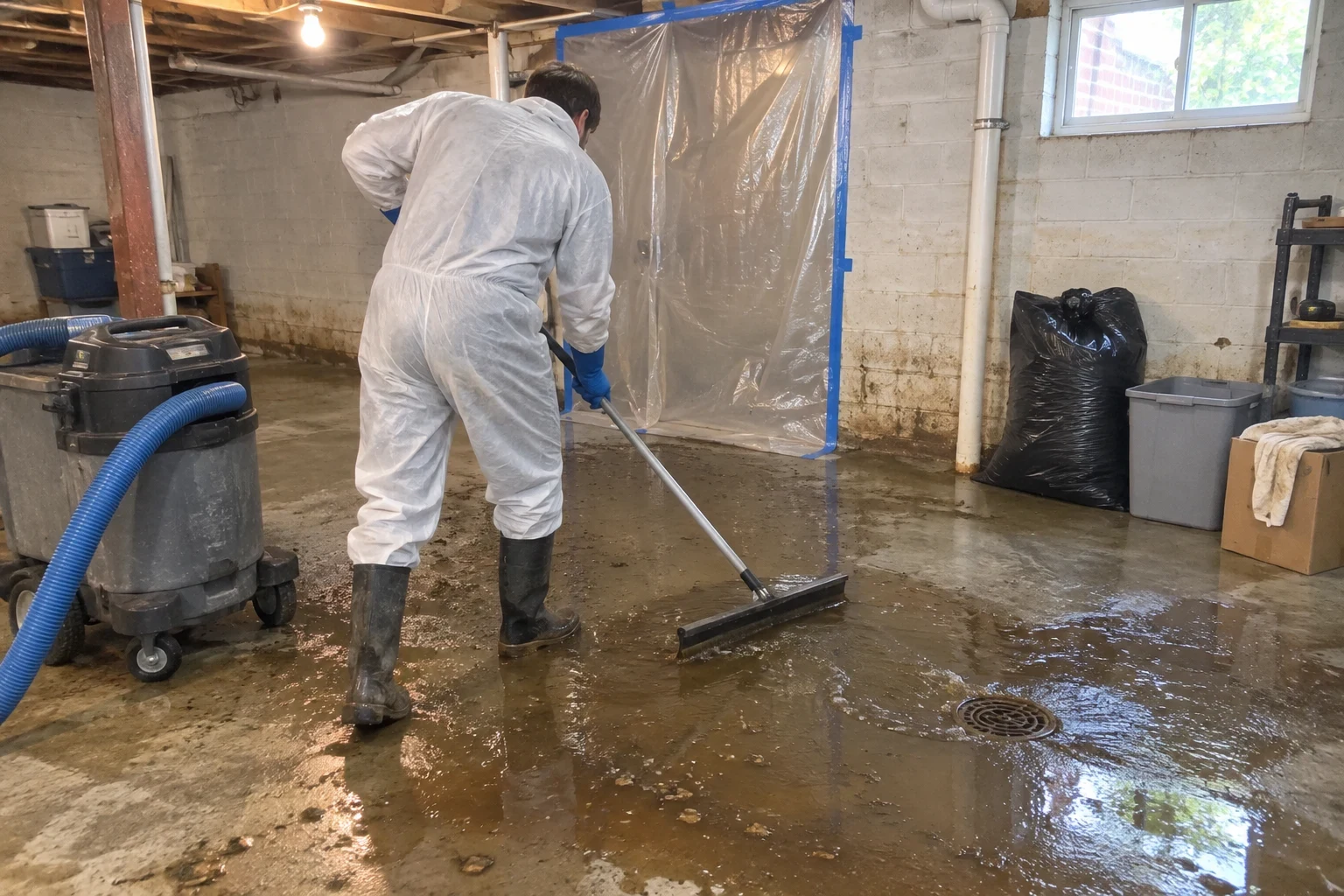
What sewage cleanup really involves
Sewage water carries bacteria and viruses. The industry calls it Category 3 water, the worst kind. It soaks into anything porous and keeps making people sick long after the floor looks dry. That is why the cleanup is different from a burst supply line.
Our crew is IICRC certified, and we follow that standard for sewage work. In plain terms, carpet and pad that sewage touched get thrown out. Drywall and insulation below the wet line get cut out. Hard surfaces like tile, concrete and sealed wood get cleaned and disinfected, then everything is dried and checked.
We start with an inspection, not a sales pitch. You see what we found, with photos, before any work begins. Many homes around Highland Springs have basements or crawlspaces where a backup can sit unseen, so we check those spaces too.
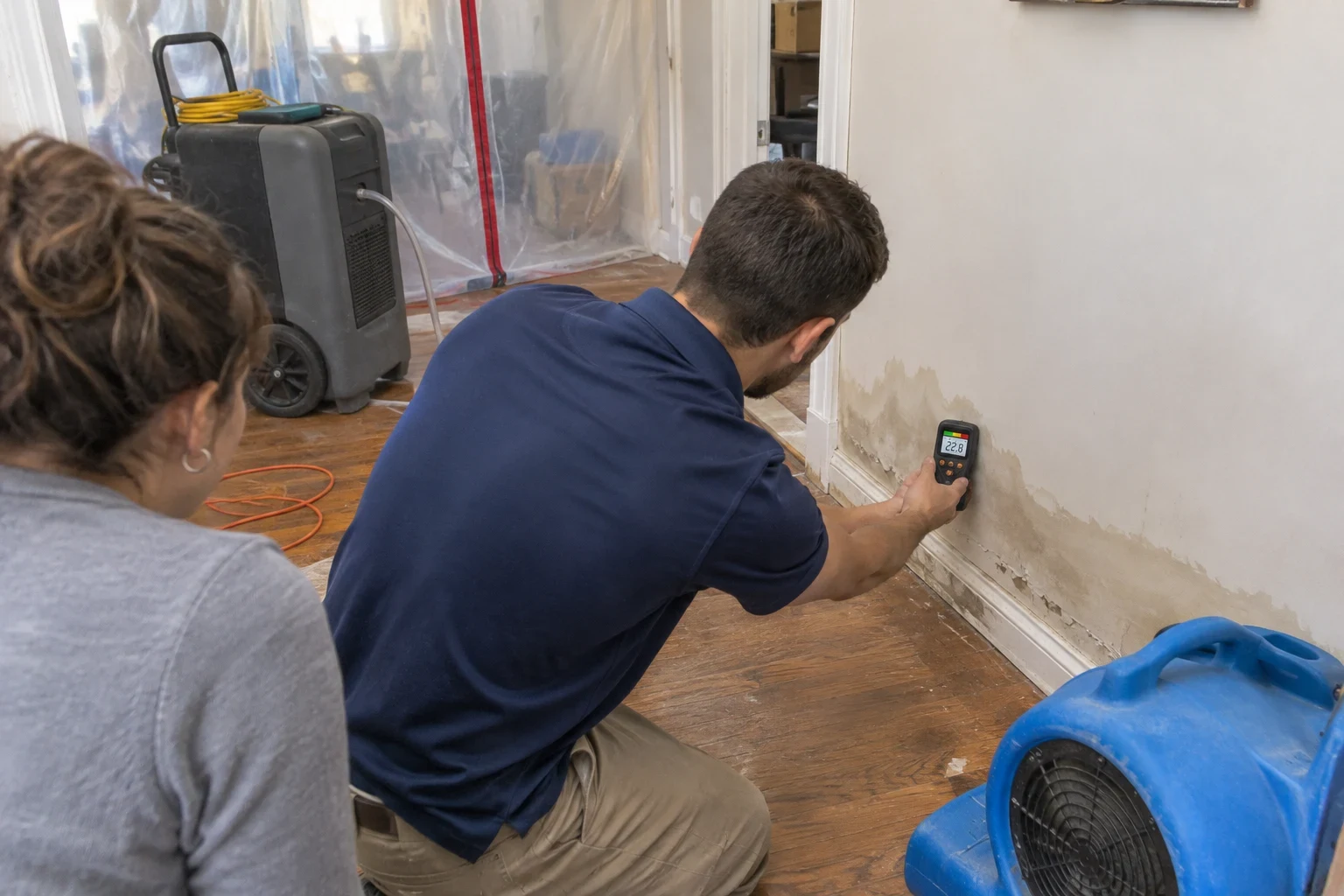
What we do on a sewage job
- 01
Sealing off the area
Plastic barriers go up around the damage, and we control the airflow so dirty air stays out of the clean parts of your home.
- 02
Pumping out the waste
We pull standing sewage water with portable or truck-mounted pumps. Any solids get bagged and taken away for proper disposal.
- 03
Removing what's ruined
Anything porous the sewage touched comes out, including carpet, pad, insulation, baseboards and drywall. We cut the drywall well above the visible water mark, since moisture climbs higher inside the wall than you can see.
- 04
Disinfecting what stays
Concrete, subfloor, framing and other surfaces we keep get scrubbed and then treated with an antimicrobial.
- 05
Drying until the meters agree
Dehumidifiers and air movers keep running until our readings show the floor and framing are dry. You can read more about this on our Drying and Dehumidifying page.
Questions about Sewage Cleanup?
Call(804) 265-4047When a backup needs more than a mop
Dirty water from the lowest drain
If dark water is coming up through a basement floor drain or the lowest toilet, the main line is likely blocked. Hold off on using sinks, showers and the washer until it's cleared.
Drains that slow down and gurgle
When more than one fixture drains slowly, or a toilet gurgles while the washer empties, a backup is often on the way.
An odor that keeps coming back
A sewage or rotten-egg smell that lingers can mean waste is leaking somewhere hidden, like under the floor or into the crawlspace.
Staining around or below a toilet
A worn-out wax ring can let waste seep into the subfloor for months. A stain on the ceiling under a bathroom is often the first thing people notice.
Water that came up during a storm
Heavy rain can push sewer lines past capacity. Any water that rose up during or after a big storm should be treated as contaminated.
How a sewage cleanup day runs
- 1
You call, we come out
We're on site in 60 mins or less. Keep kids and pets away from the area and don't try to clean it with household cleaners.
- 2
Inspection and plain findings
We check the backup source, moisture readings and how far the water spread. You get photos and a straight answer on what must be removed and what can be cleaned.
- 3
Containment and removal
We set up containment, pump out the waste and tear out the materials that can't be saved. Our crew wears protective gear the whole time.
- 4
Disinfect and dry
Surfaces get cleaned and treated, then drying equipment runs, usually for several days. We check moisture each visit and pull the equipment once readings are where they need to be.
- 5
Put it back together
Once it's dry, our Repairs and Rebuild crew can replace drywall, flooring and trim so the room is usable again.
What moves the price of a sewage job
Every backup reaches different materials, so we price the job after we walk it, not before. Once the inspection is done, we write up an estimate line by line so you can see where each part of the cost comes from. We work with most major insurance companies and can send yours our photos and moisture readings. Your adjuster still decides what the policy covers.
- Square footage affected
- A backup confined to one tiled bathroom costs far less to handle than one that spread across a carpeted basement.
- Materials that can't be saved
- Each layer that has to come out, like carpet, pad, drywall or insulation, adds labor, disposal and later replacement.
- Time before cleanup started
- The longer waste sits, the deeper it soaks into wood and drywall. A backup left for days can also start mold growth, which means extra treatment.
- Getting to the damage
- Low crawlspaces and finished rooms with cabinets or built-ins are slower to seal off and clean than an open, unfinished basement.
Common questions about sewage cleanup
Is a little sewage on the bathroom floor something I can handle?
If it stayed on tile and you have gloves, rubber boots and a proper disinfectant, it might be. Once it touches carpet, drywall or gets into a crawlspace, it's a different story. Bacteria settle into those materials where a household spray can't get to them. At the inspection we'll give you a straight answer on whether you need us at all.
Will my homeowners policy pay for a sewer backup?
That usually comes down to whether you added a sewer backup endorsement. A lot of basic policies don't include it. Reach out to your agent as soon as you can and ask. We take photos and moisture readings of everything so your claim is well documented.
Do we need to move out while you work?
Most families can stay, as long as the work area is sealed and there's a bathroom you can still use. Babies, older relatives and anyone with a weakened immune system might be safer staying somewhere else until disinfecting is finished. We'll go over it with you during the inspection.
Will you repair the sewer line that backed up?
Our job is cleaning up and restoring the damage inside your home. A clogged or broken line needs a plumber. If we spot the likely cause, we'll tell you so you can pass it along.
How many days does the whole thing take?
Pulling out the waste and disinfecting usually takes one to two days. Drying adds several more, depending on what's in the room. Repairs start after the readings say it's dry.
Sewage in your home? Get it looked at today.
We'll come out, show you what we find and lay out the cleanup in plain terms. The inspection is free.